

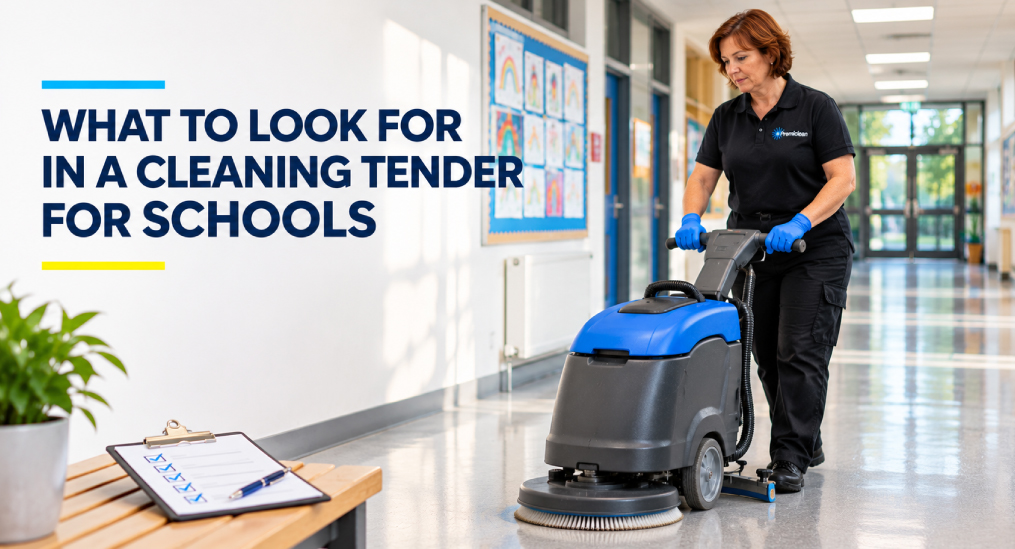
A cleaning tender for schools should clearly outline the cleaning requirements, staffing arrangements, service schedules, contract costs and quality standards expected from a cleaning contractor.
Whether a school is reviewing an existing agreement or preparing a new school cleaning tender, having a detailed specification helps bursars, school business managers and academy trusts compare suppliers fairly and secure value for money.
A well-prepared tender also helps prevent unexpected costs, staffing issues and inconsistent cleaning standards throughout the contract.
When Does a School Need to Tender Its Cleaning?
A school should consider tendering when an existing cleaning contract is coming to the end of its term, service standards are slipping, costs are rising, and cleaning needs have shifted. A tender may also be useful for schools to compare suppliers and find where they can get better value for money.
DfE Value Bands for Cleaning Tender for Schools
The Department for Education (DfE) has published a list of general procurement value bands to assist schools in determining which purchasing route might be suitable:
| Procurement Value | DfE Guidance |
| Low Value | Under £10,000 |
| Medium Value | £10,000 to £40,000 |
| High Value | Over £40,000 |
These are DfE guidance bands, not legally mandated thresholds for universal rollout.
Schools are required to review their own procurement procedures, policies and financial regulations in addition to the requirements of the local authority before selecting a route for procurement.
Framework Agreements Vs a Full Tender
Schools don’t always have to conduct a whole new tender exercise. An alternative pathway to procurement may be a framework agreement, as suppliers have been identified through a competitive process.
You have two choices:
- Framework Agreement: The school chooses a supplier from a set of approved suppliers or conducts a mini-competition, according to the rules in the framework.
- Full Tender: The school has its own specification, asks suppliers to bid, and assesses bids against agreed criteria.
A school that requires specialist school cleaning services in Warrington for multiple buildings might want to tender a competitive contract so they can compare the various models of service. An alternative framework could be more effective for a school that requires less complex mandates.
Elements of a Cleaning Tender for Schools
A good school cleaning tender should describe the work, cleaning schedule, standards to be achieved, staffing needs, and responsibilities of the successful cleaning contractor. The more detailed the specification, the easier it will be for suppliers to make a correct bid.
Example of a School Cleaning Specification
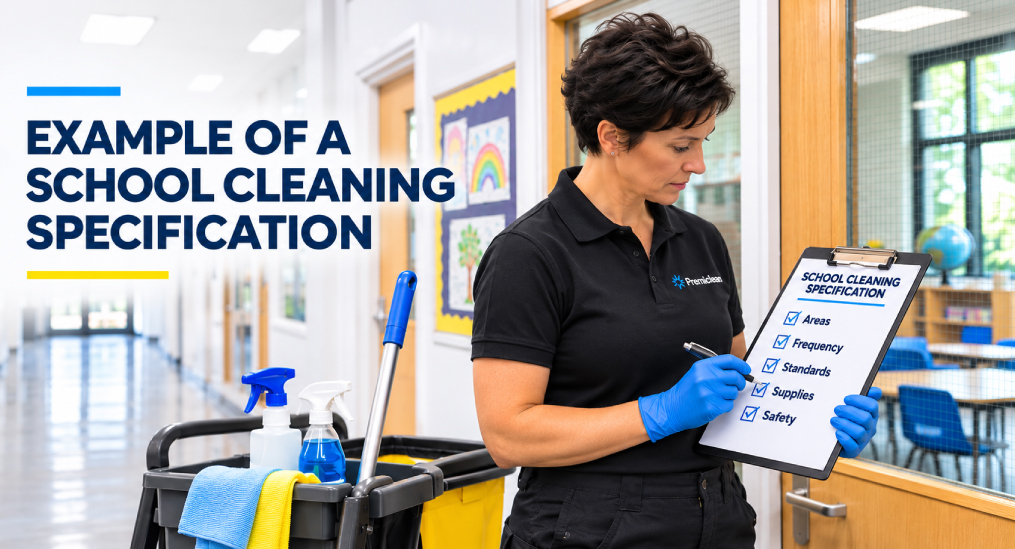
A school cleaning specification should clearly identify the cleaning requirements for each area of the premises. The following examples can help schools define their expectations when preparing a cleaning tender.
| School area | Cleaning requirements |
| Classrooms | Desks, floors, surfaces and touchpoints |
| Toilets | Sanitisation, replenishing supplies and floors |
| Canteens | Tables, floors and food-area hygiene |
| Corridors | Floors, handrails and high-touch surfaces |
| Sports halls | Specialist floor cleaning |
| Staff rooms | Work surfaces, bins and floors |
The school cleaning contract specification should address the following.
1. Cleaning tasks and responsibilities
One thing that is similar in school tenders and office cleaning contracts in Warrington is that a school tender also needs to list all required tasks and responsibilities of a cleaner.
This is important because different areas have different hygiene and cleaning needs, and the cleaner must meet all needs. This may also vary from one school to another.
2. Cleaning frequency and schedule
The tender must state how many times each area needs to be cleaned. Don’t give generalised maintenance directives like ‘clean regularly’ or ‘maintain good standards’.
Instead, specify:
- Day-to-day cleanings during term time.
- Morning/evening cleaning arrangements.
- Floor cleanings and detailed dusting once a week.
- Periodic deep cleaning.
- Holiday cleaning, including summer deep cleans.
- Additional cleaning for school events and unexpected requirements.
The DfE’s cleaning services guidance suggests that it is important to establish how many weeks cleaning are required throughout the year and to differentiate routine cleaning and periodic cleaning.
If you also need cleaning for staff rooms and office areas, you can book daily cleaning for offices to maintain a cleaner premises overall.
3. Equipment, products and consumables
Define who will be responsible for cleaning materials, supplies, protective clothing, bin liners, toilet rolls, hand soap, etc.
Also establish where cleaning equipment will be stored, who is responsible for equipment maintenance, which products are permitted on school premises, how chemicals should be labelled and stored, and whether environmentally preferable products are required.
This helps avoid any conflict about extra charges once the contract has started.
4. Site-specific requirements
The size of the school, layout, opening time and daily activity should be taken into account when determining the cleaning specification. Suppliers should be aware of the access arrangements before tendering, such as the security procedures, restricted areas, and any other special cleaning requirements.
This is especially important when you’re deciding on how to choose a school cleaning contractor to work with, as the cleaning supplier will need to show that the service they are proposing is suitable to the needs of the school.
How to Compare Pricing and Evaluate Cleaning Tenders
The cheaper the quote, the better the deal is not always true. Each proposal should be evaluated for the overall value, including service quality, staffing, experience, reliability, and total cost of the contract.
Request a detailed breakdown of prices from suppliers and inquire about staffing hours, holiday/sickness cover, cleaning materials and equipment, and supervision costs. Ask if there is an extra charge for deep cleaning services or if additional services and out-of-hours work are covered, and explain any changes in price or additional charges for the year. This will prevent sudden expenses down the road.
A fixed scoring system makes it fairer and more justifiable.
| School Tender Evaluation Criteria | What To Assess |
| Price | Total contract cost, staffing costs, and additional charges |
| Service Quality | Cleaning methods, schedules and quality assurance |
| Staffing | Staff numbers, training and absence cover |
| Experience | Relevant experience in schools or similar environments |
| Compliance | Safeguarding, health and safety and insurance |
| Management | Supervision, communication and complaint handling |
| Social Value | Environmental commitments and local community benefits |
Before inviting bids, the school should determine the criteria for evaluation and the weightings of each of the scoring criteria. All suppliers are assessed against the same requirements.
The social value of cleaning may refer to the creation of local jobs, the development of staff, the responsible management of waste, and environmentally friendly cleaning practices.
Safeguarding and DBS Checks
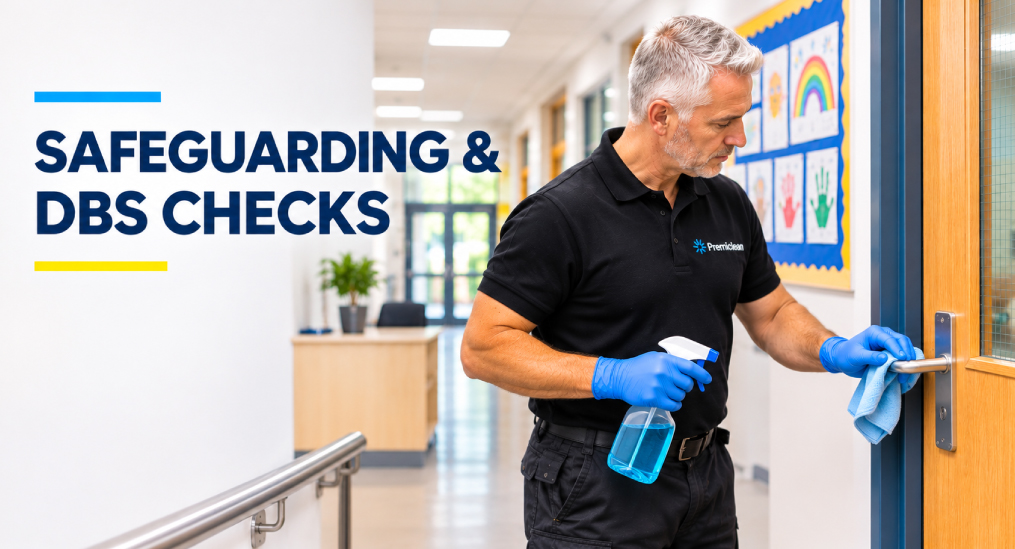
The tender should document the school’s expectations of the safeguarding process and the checks which should be carried out by the cleaning process.
The Keeping Children Safe in Education 2026 guidance by the Department for Education requires schools to ensure that contractors and their employees have the right level of DBS checking for their role and contact with children.
The nature of the required check will vary depending on whether it is regulated activity or opportunities for regular contact with children. No contractor should be permitted to work without supervision or to carry out regulated activity unless she/he has been checked.
It is important for a professional cleaning company to show that their staff is properly trained in the tasks they will be carrying out.
Schools should also request relevant accreditations and insurance to ensure that suppliers have the necessary protections and documented working practices in place. Always refer to the actual certificates, limits, and expiry dates, and not just general claims.
Cleaning Contract KPIs and Quality Management
Cleaning contract KPIs are measurable metrics that track the quality of the cleaning services, reliability, and the performance of the cleaning supplier during the contract period.
| KPIs | What It Measures |
| Cleaning Completion Rate | Percentage of scheduled tasks completed |
| Inspection Scores | Results of regular cleaning inspections |
| Response Times | Time taken to address reported issues |
| Staff Attendance | Reliability of staffing arrangements |
| Complaint Resolution | Time taken to investigate and resolve complaints |
| Deep Cleaning Completion | Whether periodic cleaning meets the agreed schedule |
| Contract Reviews | Frequency of performance meetings and reporting |
The contractor and the school management should agree with each other on how these measures will be documented and evaluated.
What to Check Before Awarding a School Cleaning Contract
Schools should carefully consider commercial terms and practical arrangements before entering into a contract. While a supplier might make a good offer initially, they can end up with issues if the contract terms are not clear.
There are four key points to inspect.
The length of the contract and the conditions where the contract is renewed.
Verify the original term of the contract, renewal, and notice. Do not include ambiguous renewal provisions which may bind the school into a longer contract than originally anticipated.
Clauses and ways of exiting the agreement
The contract should provide terms for termination and specify what will happen if the supplier keeps failing to fulfil its obligations.
Ensure arrangements for outstanding payments, transfer of relevant records, notice periods/termination provisions, return of keys and equipment, and assistance to transition to another provider.
Mobilisation and handover
The mobilisation is the preparation of the new cleaning service before the official start of the contract.
The contractor should present an implementation plan including:
- Hiring or rotation of cleaning staff.
- Site induction and safeguarding procedures.
- Equipment and cleaning product delivery.
- Agreed cleaning schedules.
- Staff training and supervision.
- Communication with school management.
A planned handover avoids the risk of any missed cleaning during the changeover.
Staffing arrangements and service continuity
Verify who will be responsible for the cleaning staff, who will be cleaning and what will be done if staff are not available.
Schools should also determine if the contractor employs its own staff or agency workers and how replacement staff will be trained and checked.
So what does the Procurement Act 2023 mean for schools?
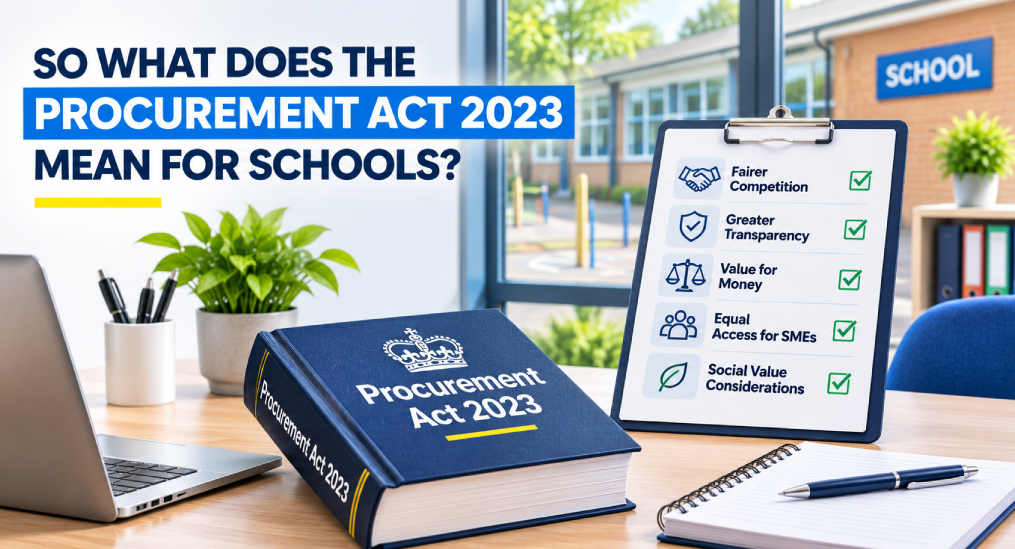
The Procurement Act 2023 provides guidance on how schools and academy trusts should behave to ensure public contracts are awarded fairly, with transparency and through competition.
Schools should therefore pre-determine the right procurement process before advertising a contract or tendering to cleaning companies.
The DfE provides guidance on how schools can find the right way to buy.
What to expect in a School Cleaning Tender?
When you are considering a tender, keep this checklist in mind to ensure that the tender addresses the needs of the school in terms of operational, financial, and compliance.
School Cleaning Tender Evaluation Checklist
- Describe cleaning specification and areas
- Daily, weekly and periodic cleaning schedules
- Cleaning plans in terms and holidays
- Equipment, products and consumables responsibilities
- Detailed pricing and additional charges
- Staffing, staff training and absences
- Suitable DBS checks and safeguarding measures in place
- COSHH and health and safety documentation
- Appropriate insurance and compliance documentation
- Measurable KPIs and inspection procedures
- Social value and environmental commitments
- Contract terms, renewals and break terms
- Considerations of TUPE, if applicable
- Arrangements for mobilisation, handover and exit.
- Routine performance evaluations and reporting.
Schools should also ask if the proposed service can meet new demands, such as more cleaning in peak times or adjustments to building usage.
The right contractor should be able to prove they have reliable staff, good supervision, clear pricing, and they have a practical quality management approach. These are all factors that help to keep the cleaning standards uniform and that minimise the risk of disruption to service.
If you are reviewing your current provision, you can apply for a free site survey to discuss your requirements and explore a cleaning schedule that best meets your premises.
A site assessment can also help establish the right arrangements for daily cleaning for offices and other commercial environments.
Frequently Asked Questions
When should a school put its cleaning contract out to tender?
A school should tender when its existing contract is ending, cleaning standards are declining, costs are rising, or cleaning requirements have changed.
What should a school cleaning tender include?
It should include cleaning tasks, schedules, staffing requirements, equipment, consumables, safeguarding checks, pricing, KPIs, and contract terms.
How do schools evaluate cleaning tender proposals?
Schools should compare bids based on price, service quality, staffing, experience, compliance, management, and social value using agreed scoring criteria.
Are DBS checks required for school cleaning staff?
DBS checks depend on the role and level of contact with children. Schools must ensure contractors meet the appropriate safeguarding requirements.
What is the difference between a cleaning framework agreement and a full tender?
A framework lets schools select from pre-approved suppliers, while a full tender invites suppliers to bid against the school’s own specification and criteria.