

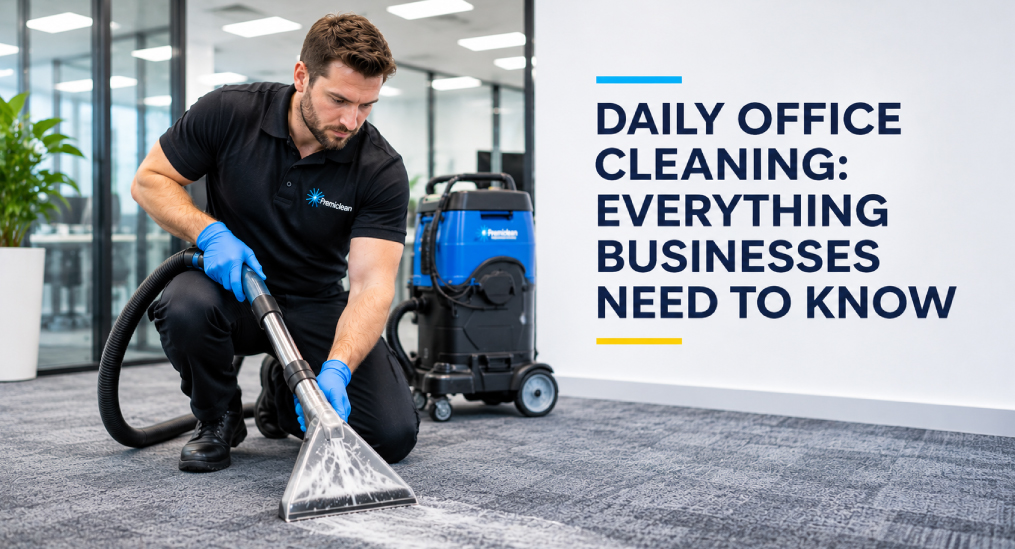
Daily office cleaning is essential for maintaining a clean, hygienic and professional working environment. It involves routine tasks such as cleaning desks, emptying bins, sanitising frequently touched surfaces, maintaining kitchens and washrooms, and keeping floors clean.
For businesses across the UK, a consistent office cleaning schedule helps prevent dirt and waste from accumulating while creating a more comfortable workplace for employees and visitors.
Whether you manage a small office or a large commercial premises, understanding what needs to be cleaned daily can help you maintain better hygiene standards and choose the right commercial cleaning service.
What is Daily Office Cleaning?
A routine commercial cleaning service carried out on each working day (usually 5 days per week) to maintain high standards of cleanliness, appearance and adherence to Workplace (Health, Safety and Welfare) Regulations 1992 in workplaces. That’s what daily office cleaning is all about.
A standard daily cleaning schedule consists of:
- Emptying bins and picking up general waste.
- Cleaning desks, tables and accessible surfaces.
- Cleaning frequently touched areas, such as door handles and switches.
- Vacuuming carpets and mopping hard floors.
- Washing kitchen, sink and communal equipment.
- Cleaning toilets, washbasins and other washroom surfaces with disinfectant.
- Restocking soap, toilet paper, and paper towels.
- Inspecting reception and conference areas.
The specific duties will vary with the size of the premises, the number of employees, and the use of different areas.
These are all factors that should be discussed with a cleaning service provider before hiring them for an office cleaning in Warrington. This allows for the cleaning jobs to be aligned with the actual needs of the premises.
What Is The Difference Between Daily Office Cleaning And Deep Office Cleaning?
Both cleanings serve a purpose to maintain good standards of cleanliness but they are different.
Everyday cleaning involves removing everyday dirt and mess. Deep cleaning involves cleaning at a more detailed level and requires additional time.
| Factor | Daily Office Cleaning | Deep Office Cleaning |
| Purpose | Maintains everyday cleanliness | Removes built-up dirt and grime |
| Frequency | Daily or as scheduled | Weekly, monthly or periodically |
| Main Tasks | DustingEmptying binSurface and floor cleaning | Carpet cleaningUpholstery cleaning Detailed floor care |
| Areas Covered | DesksKitchensWashrooms Shared spaces | Hard-to-reach areasCarpetsFurnitureNeglected surfaces. |
| Time Required | Usually takes less time | Requires more time and detailed work |
The majority of workplaces have both. The regular cleaning services ensure that the office is well-maintained, whereas deep cleaning addresses specific areas that require special attention.
When searching for office cleaning Cost Warrington, businesses should ask if the cleaning contract includes both regular cleaning and special cleaning services.
Daily Office Cleaning Checklist
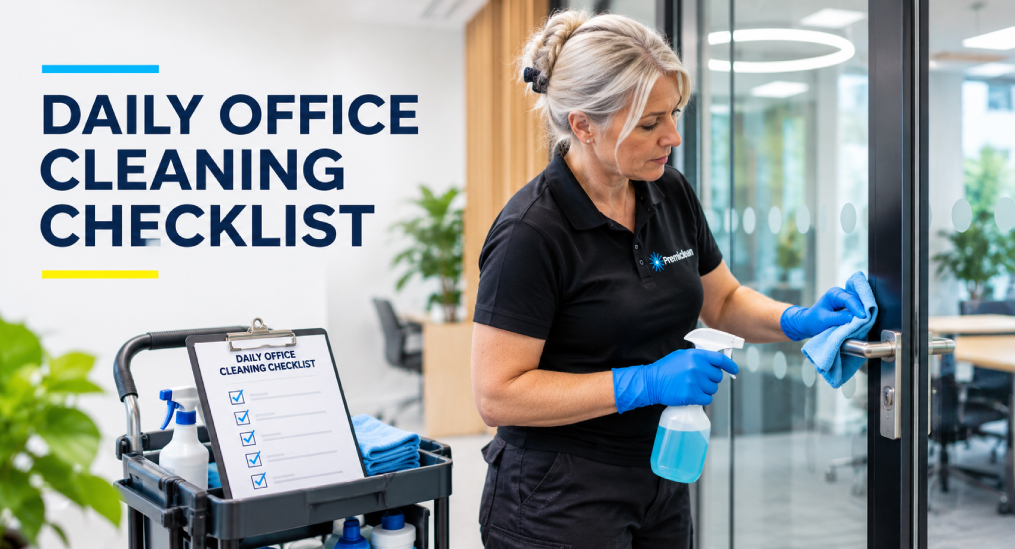
To make your tasks a little easier, here is a complete cleaning checklist to keep track of everyday tasks.
General Office Areas
- Empty bins and change liners.
- Dust accessible surfaces.
- Clean work surfaces and shared workstations (if appropriate).
- Wipe frequently used surfaces.
- Clean door knobs and light switches.
- Vacuum carpets and hard floors.
- Remove visible marks from accessible glass surfaces.
Reception and Meeting Rooms
- Clean reception counters.
- Wipe meeting tables.
- Clean shared touchpoints.
- Straighten chairs and common furnishings.
- Empty waste bins.
- Mop or vacuum floors.
Kitchen and Break Rooms
- Wipe and disinfect worktops.
- Wipe down sinks and taps.
- Clean tables and chairs.
- Wash accessible surfaces of appliances.
- Empty bins.
- Mop and sweep floors.
Washrooms
- Wash & disinfect toilets.
- Wipe down sinks and faucets.
- Wipe mirrors.
- Refill soap and paper.
- Empty waste bins.
- Mop floors.
- Ensure the area is clean and tidy.
Final Checks
- Properly store cleaning facilities.
- Ensure tasks are completed.
- Report any maintenance or hygiene problems.
- Document tasks completed on agreed list/reporting system.
The checklist can be modified to fit the building size and shape. For example, an office with several floors may need a separate commecial office cleaning checklist for each floor.
Keeping a record of what has been finished is also helpful. This helps managers ensure cleaning is being done to standard.
Once you know what services we offer, you can discuss the details with us and decide on a plan that works for your business.
How To Clean An Office: A Step By Step Guide
Office cleaning is essential to ensuring no tasks are forgotten, and that dirt is not spread from one zone to another, if it can be done properly.
Standard cleaning should be done in a certain sequence. These are 7 steps that cleaning staff can take.
Step 1: Collect Cleaning Supplies and Safety Equipment
Be sure to have all necessary supplies before beginning.
Take color coded cloths for various areas. For instance, have different cloths for kitchens, washrooms and common areas in the office.
Cleaning products should be used as directed. Staff should also adhere to appropriate COSHH guidance and should never combine cleaning chemicals.
Step 2: Clear Waste and Declutter Workspaces
Empty bins and place general garbage in trash cans first.
Remove disposable materials from common-use areas, but do not move personal property, documents or office furniture without permission.
Step 3: Dust from High to Low
Clean up higher, easy-to-reach surfaces first, then desks and lower surfaces.
This prevents dust from dropping to cleaned surfaces.
Use a suitable microfibre cloth to collect dust rather than spreading it around.
Step 4: Clean Areas that are Touched Often
Clean surfaces first. Use disinfectant as necessary and as directed by the product; including a contact time.
Step 5: Clean Kitchens and Break Rooms
Clean work surfaces, tables, taps and sink. Wipe down easily accessible appliance surfaces and clear away food wastes.
Focus on common areas where food is prepared or consumed.
Step 6: Clean Washrooms
Wash and sterilise toilet, sink and tap surfaces. Clean mirrors, empty bins and replenish soap/paper stock.
Use separate cleaning equipment for washrooms to avoid carrying dirt into other parts of the building.
Step 7: Complete Floors
Vacuum carpeted areas and sweep or mop hard surfaces.
Use cleaning products that are suitable for the floor type. Place warning labels on wet floors and leave the floors to dry before they are walked on.
Once a routine is established, it is easier to maintain cleanliness in all areas without neglecting anything.
How to Choose the Right Office Cleaning Company
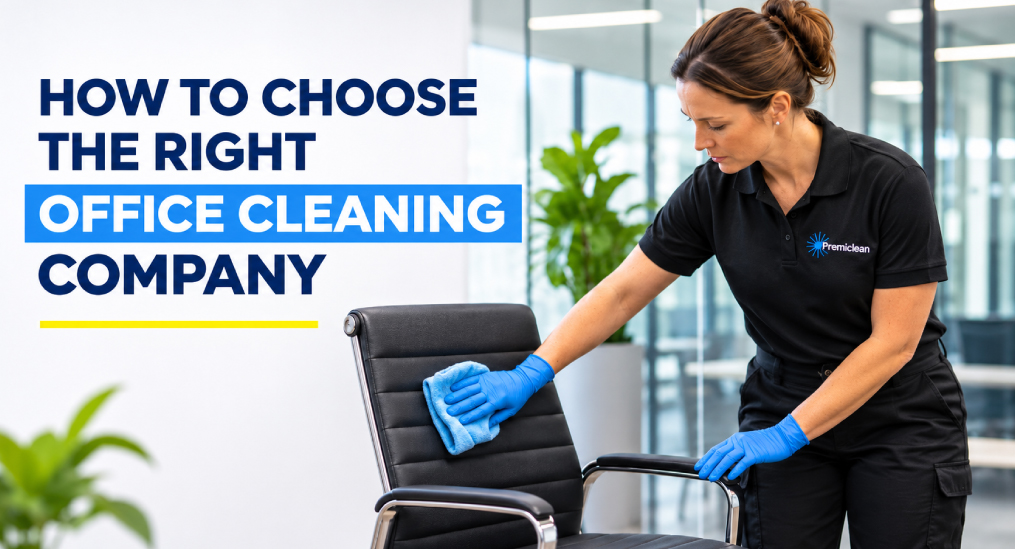
Comparing prices is not the only way to find a reliable office cleaning company. You must have a provider who is aware of your workplace, arrives as promised and keeps to your desired standard of cleanliness.
Here are some points to keep in mind when deciding.
1. Check their Experience
Choose a company that has experience with commercial cleaning.
Each premise has its own requirements. A workplace, school or public facility may have different cleaning needs and hours.
Inquire about the kind of buildings they work on and if they have experience on premises like yours. The contractor should also have adequate knowledge on how to disinfect an office.
2. Ask about Staff Training and Supervision
Inquire about staff training, staff supervision and how the company deals with failed tasks or complaints.
Staff need to be aware of how to operate cleaning products safely and what equipment will work on which surfaces.
3. Understand What is Included
If you are about to sign a service ask them what they will be cleaning. The contractor should be able to provide a detailed overview of tasks after conducting a free site survey.
This ensures that there is no confusion with respect to what the agreement covers.
4. Review their Quality Checks
A cleaning company ought to have a distinct method to verify its cleaning.
This can be anything from supervisor visits, checklists, digital reporting, to regular feedback from clients.
These checks assist in early detection of issues and in maintaining a consistent level of cleanliness.
For detailed information, read the HSE guidance on cleanliness at work regulations and employers’ responsibilities.
5. Make an Agreement on a Flexible Cleaning Plan
Your company may require cleaning after work, early in the morning or throughout the a day.
Ensure that the provider can work around your opening times and be flexible with their schedule if your needs do change.
What to Ask Before Hiring
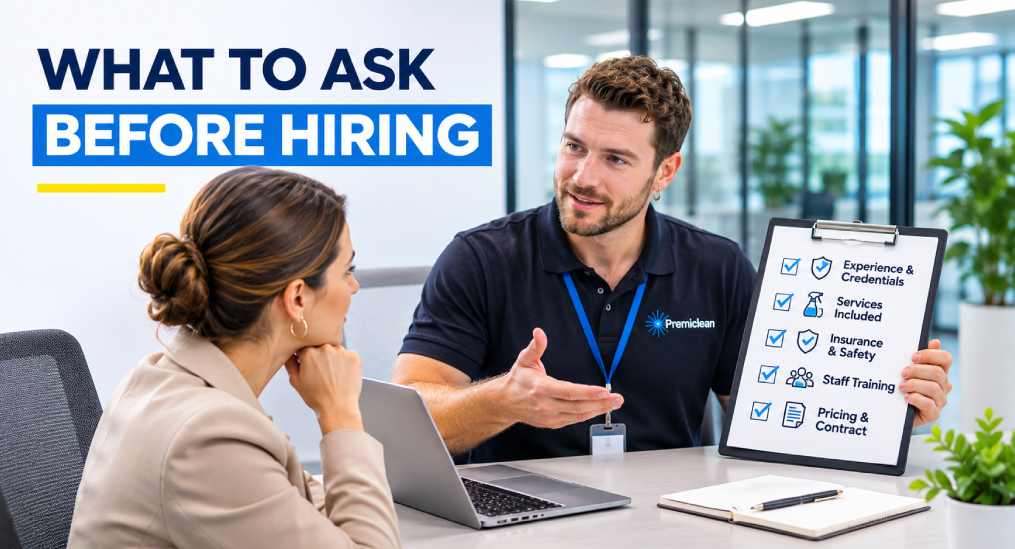
Before choosing a cleaning contractor, ask:
- What is your experience in commercial cleaning?
- How do you provide training and supervision for your employees?
- Can you create a cleaning schedule for our premises?
- What do you look for when evaluating the quality of your work?
- What if a cleaning job is forgotten?
- Are cleaning products and equipment included in the price?
- If there are changes in our needs can the cleaning schedule be adjusted?
For businesses in the education industry, there are other factors to consider when choosing a school cleaning contractor, including safeguarding, staff suitability and site access.
Summing Up
Cleaning an office doesn’t have to be a complicated affair; it simply needs to be done regularly.
A suitable cleaning schedule should reflect the size of the premises and how people use it. Periodic deep cleaning and quality checks are also recommended to support regular cleaning.
For a reliable cleaning service for your business, please contact PREMiClean to talk about your needs and provide you with a complimentary site survey.
Frequently Asked Questions
What does daily office cleaning include?
Daily office cleaning includes emptying bins, dusting surfaces, cleaning desks, sanitising touchpoints, maintaining kitchens and washrooms, and cleaning floors.
How often should an office be professionally cleaned?
Most offices benefit from daily cleaning, while deep cleaning tasks such as carpet and upholstery cleaning can be scheduled weekly, monthly or periodically.
What is the difference between daily office cleaning and deep cleaning?
Daily cleaning maintains everyday hygiene and appearance, while deep cleaning tackles built-up dirt, carpets, upholstery and areas requiring more detailed attention.
How long does it take to clean an office?
Cleaning time depends on the size of the premises, number of employees, facilities and agreed tasks. Larger offices generally require more cleaning time.
How do I choose a reliable office cleaning company?
Look for commercial cleaning experience, trained staff, hands-on supervision, flexible schedules, clear service agreements and regular quality checks.